Seven Rustic Slate Stepping Stones: A Pathway to Serenity in a Japanese Garden
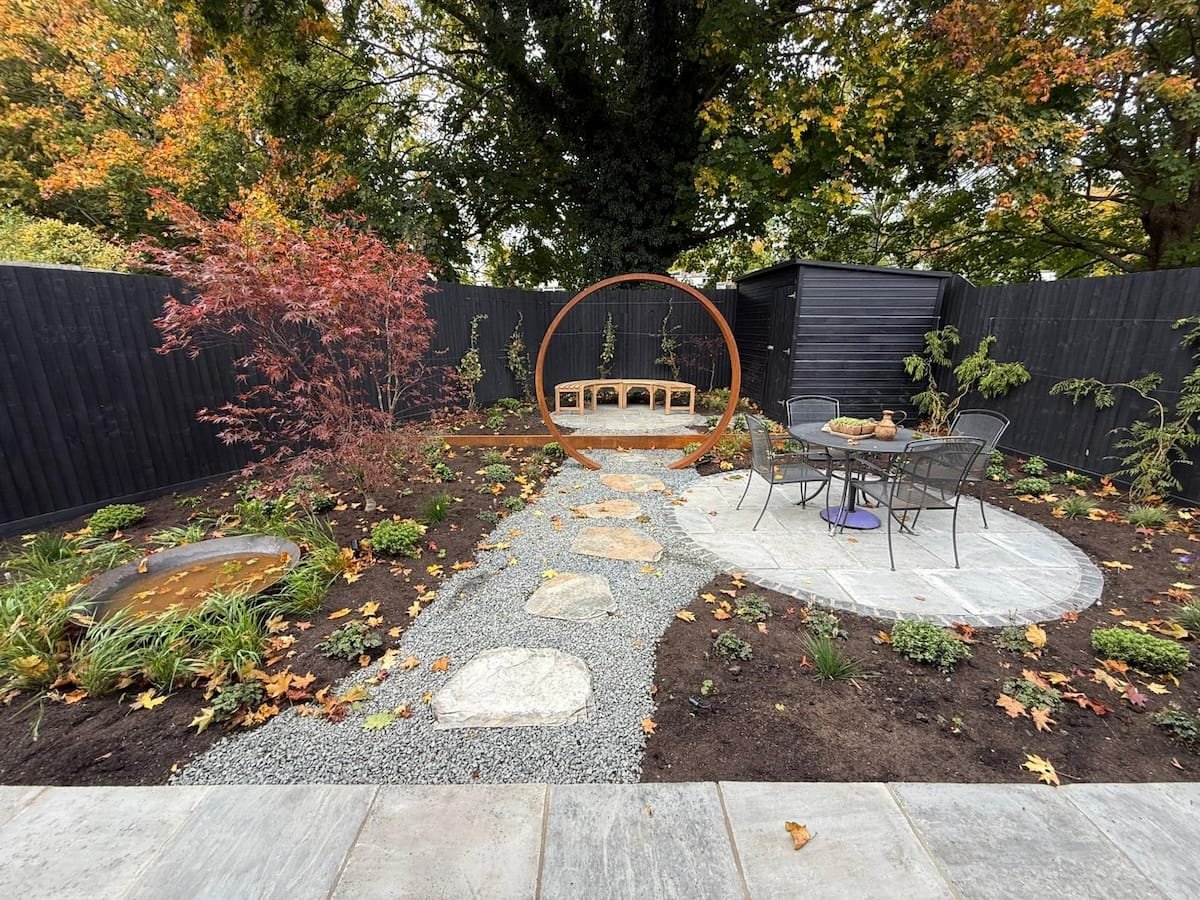
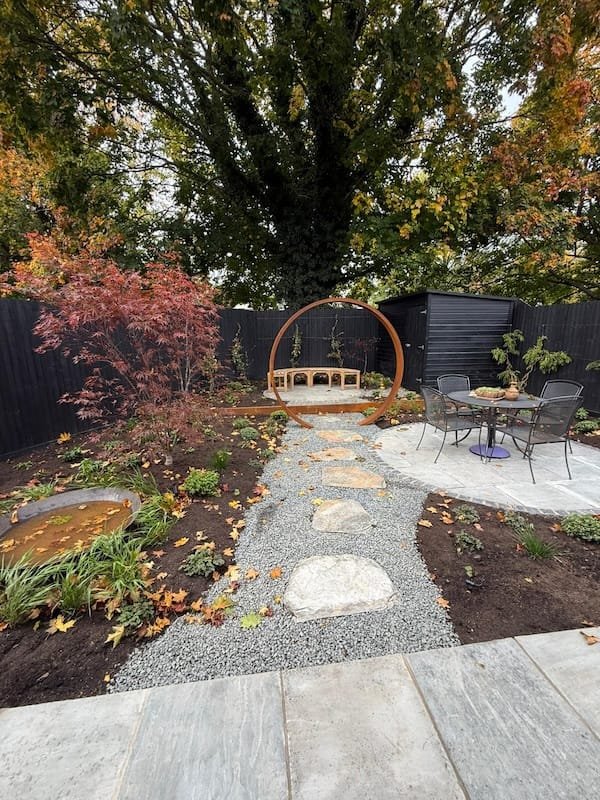
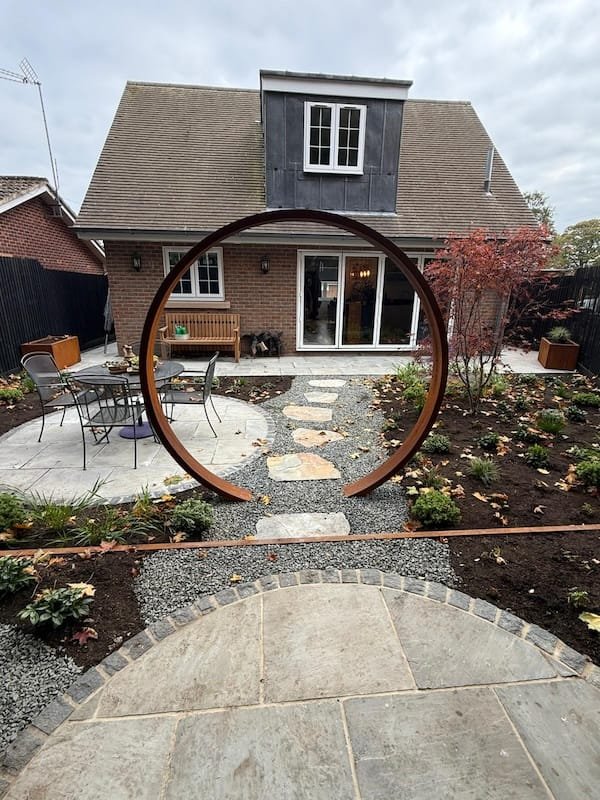
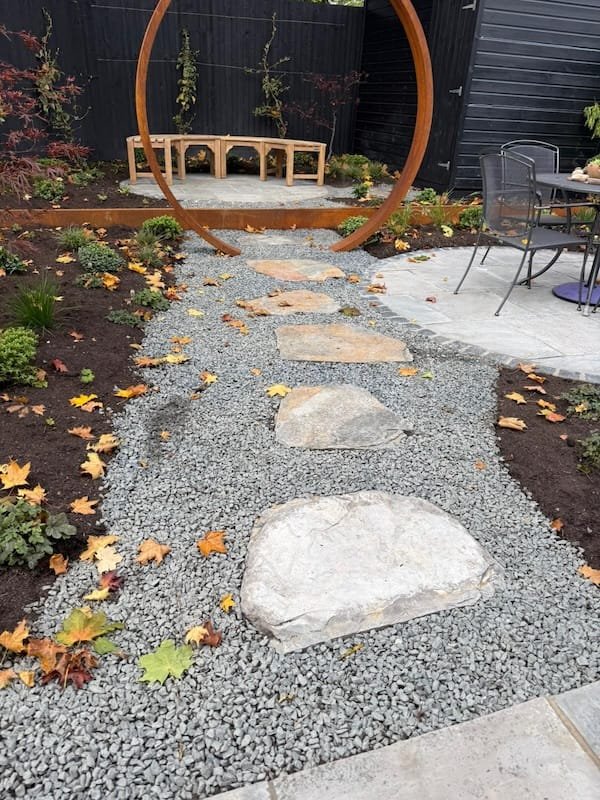
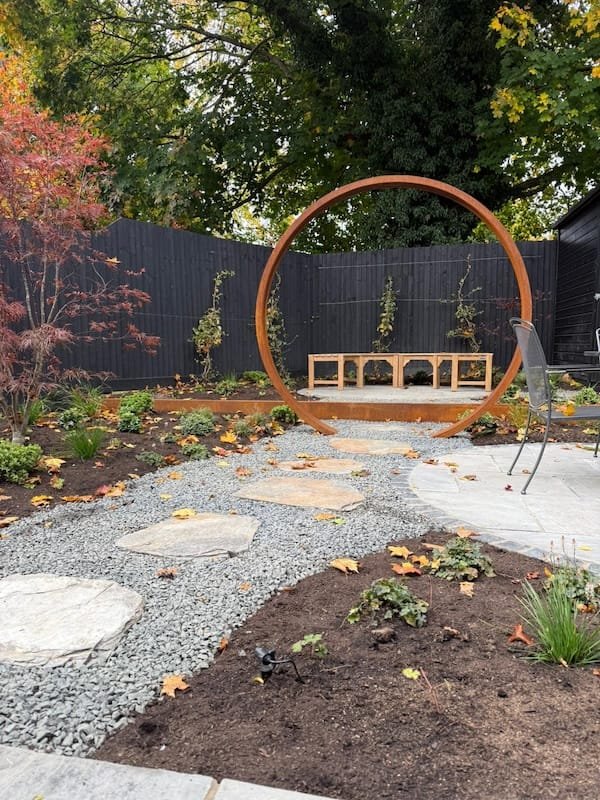
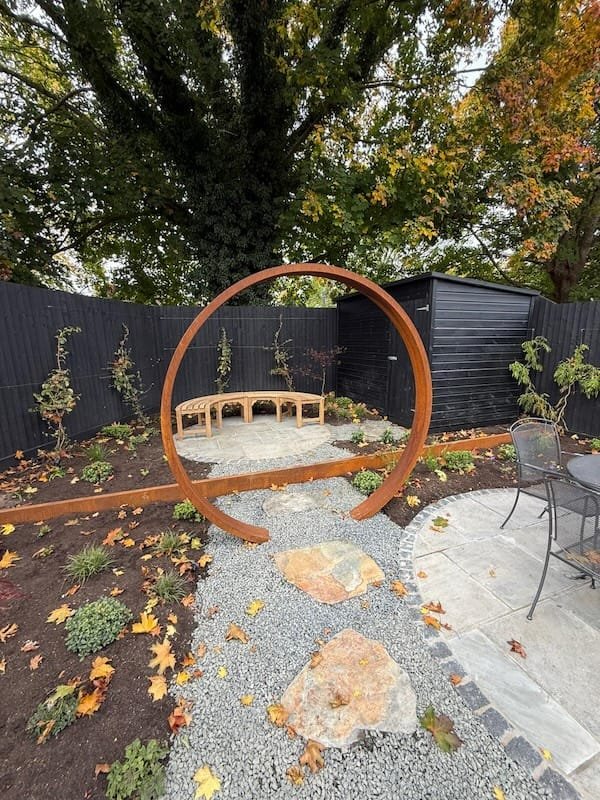
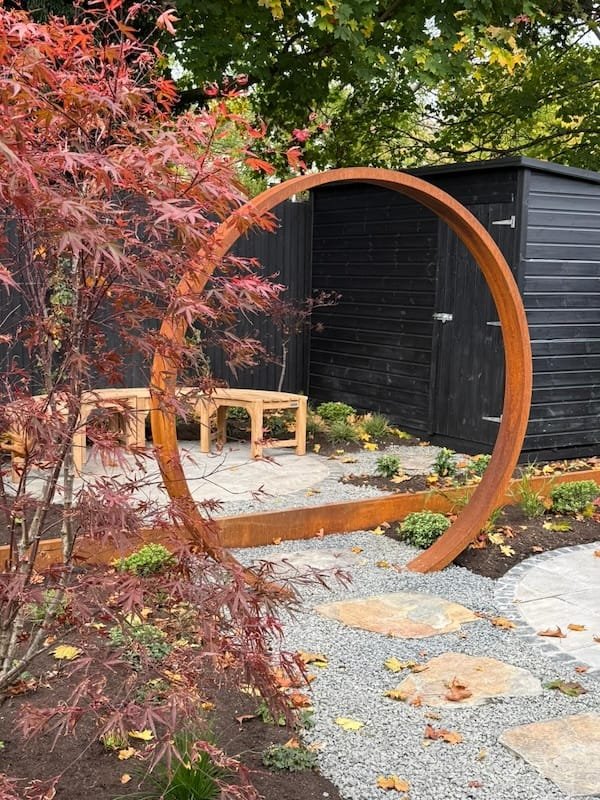
In every Japanese garden, paths play a quiet but powerful role. They guide movement, invite reflection, and connect one part of the landscape to another in a way that feels both natural and symbolic. In this recent garden design and build in Winchester, seven rustic slate stepping stones form a meandering path through soft moss and delicate planting, leading gently to a circular patio — a calm, open space for contemplation and rest.
More than just a functional walkway, these hand-crafted slate stepping stones express the essence of Japanese design philosophy: simplicity, balance, and the beauty of imperfection.
The Meaning of the Garden Path
In Japanese garden design, pathways are far more than routes from one place to another. They represent a journey — a physical and spiritual passage that slows the visitor down and encourages mindfulness. Each step becomes an act of awareness.
The seven-stone path is no coincidence. In Japanese culture, the number seven is deeply symbolic, representing good fortune, spiritual awakening, and harmony. As the visitor walks across the stones, there is an intentional rhythm to the spacing — each placement invites a pause, a glance toward the surrounding greenery, or a quiet moment of reflection.
This sequence of stones leads not to a grand destination, but to a circular patio, symbolising completeness and unity. The result is a space that feels both meditative and connected — a reminder that every step of the journey holds meaning.
The Beauty of Rustic Welsh Slate
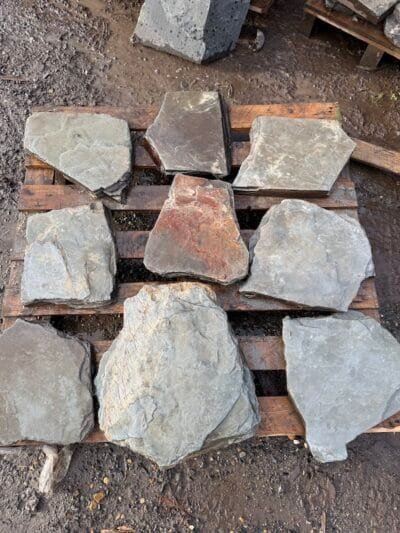
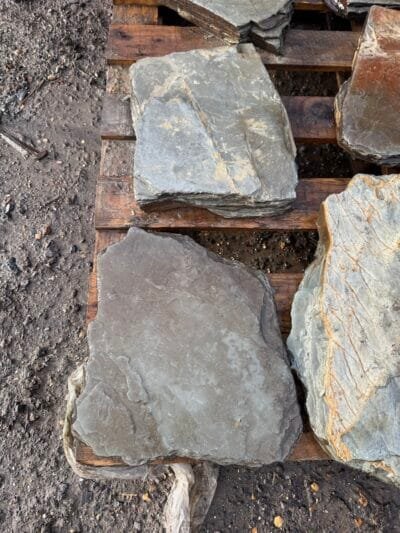
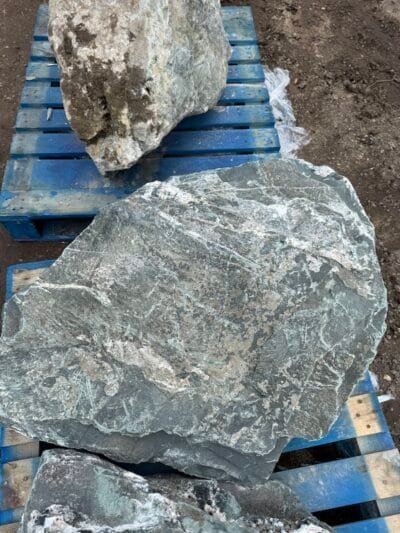
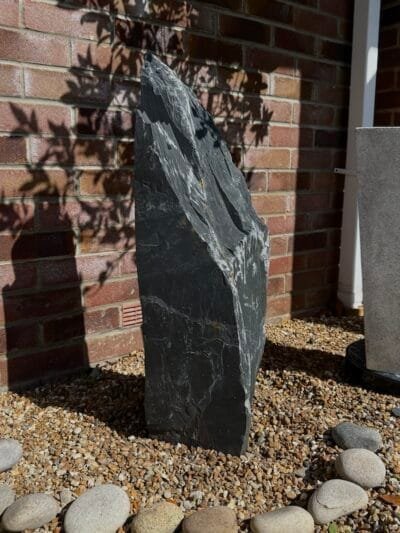
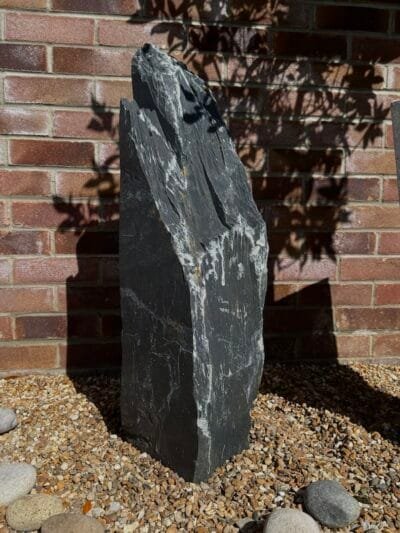
The stepping stones in this garden were cut from natural Welsh slate — a material prized for its strength, durability, and timeless character. Each piece has been left deliberately rustic, with rough-hewn edges and organic shapes that reflect the stone’s geological origins.
Slate’s natural texture gives the path an earthy, grounded presence. When it rains, the surface darkens to a rich charcoal sheen, and subtle tones of blue, green, and purple shimmer under the light. As the stones weather, they develop a soft patina, further enhancing their authenticity.
Unlike smooth concrete pavers or geometric tiles, rustic slate stones offer individuality — no two pieces are identical. Each tells its own story through variations in grain, layering, and colour. This individuality aligns perfectly with wabi-sabi, the Japanese philosophy that celebrates natural imperfection and transience.
Crafting the Path
The installation of a Japanese stepping stone path is an art in itself. The goal is to make the design feel effortless — as though the stones have always been there.
- Planning the route – The path was designed to curve gently, leading visitors from the garden’s entrance toward the circular patio. The gentle bends create intrigue and a sense of discovery.
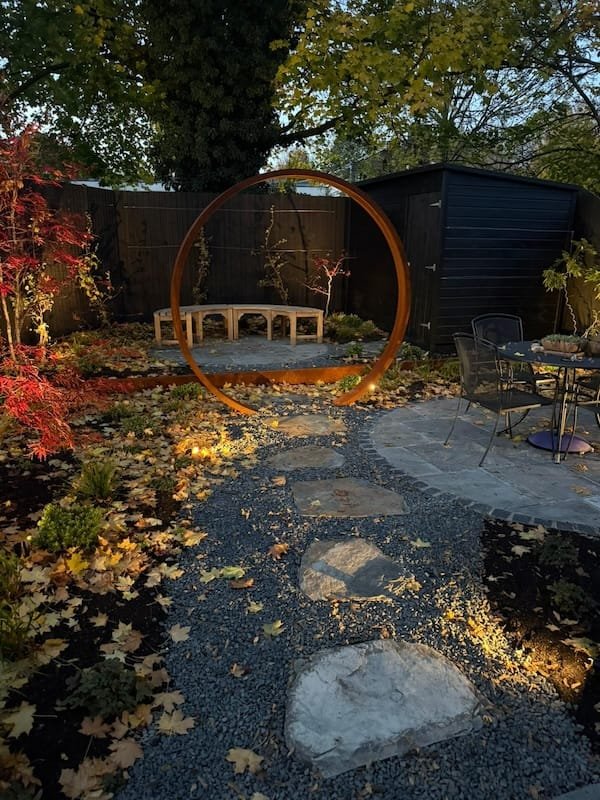
- Selecting the stones – Seven irregular slate slabsmeasuring between 600mm and 800mm were chosen for their balance of size, texture, and tone. Each stone was placed to invite a natural walking rhythm — around 60 to 65 cm apart, the comfortable stride of a slow, mindful walk.
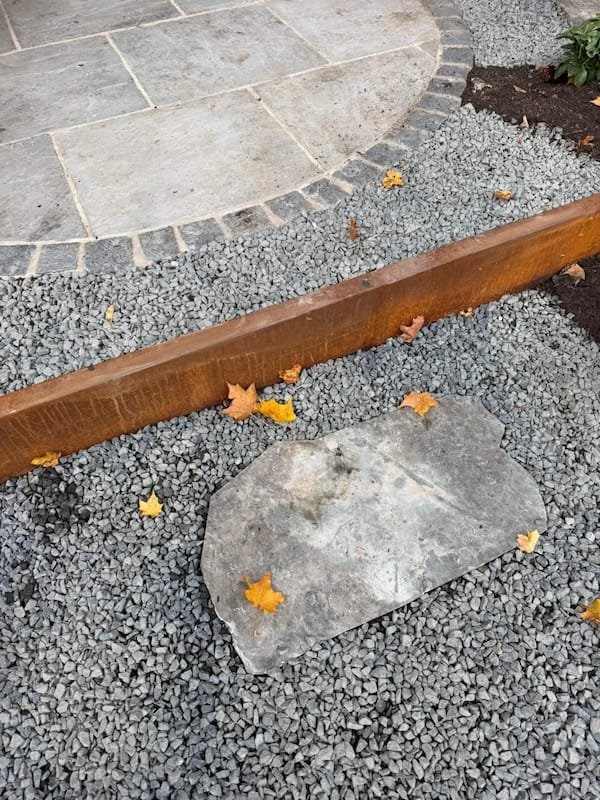
- Setting the foundation – Each stone was bedded into compacted sand and gravel, ensuring stability while allowing natural drainage. The edges were left slightly irregular so moss and groundcover could grow around them.
- Finishing touches – Fine grey gravel was placed inbetween with low plantings of Japanese forest grass, moss, and ferns were added along the edges, softening the contrast between stone and soil. A large Japanese Acer provides further height and structure.
The result is a path that feels timeless — as if nature itself laid it down.
The Circular Patio: A Place of Stillness
At the end of the path lies the circular patio, constructed from patio slabs that already existed in the garden, these have been reused and repurposed. The circular form holds deep symbolism in Japanese garden culture — representing the moon, enlightenment, and wholeness.
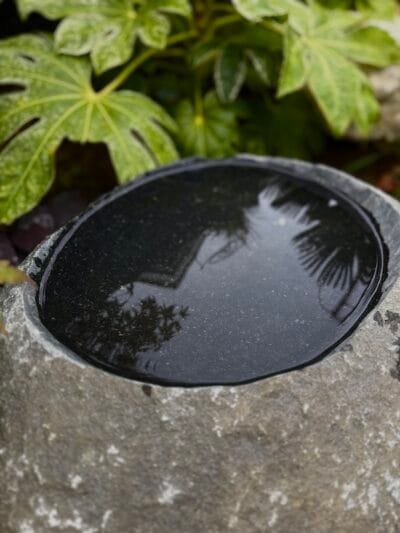
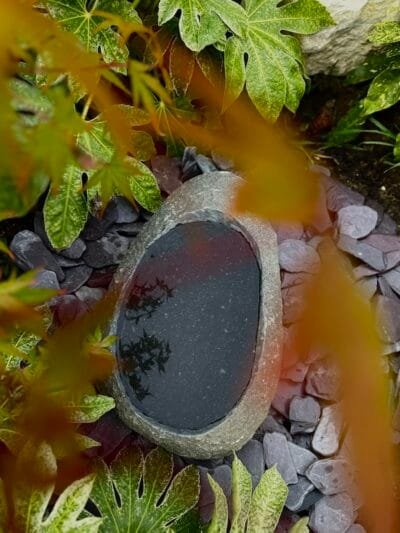
The patio serves as a place of rest and contemplation, a space to pause and absorb the sights and sounds of the garden. Surrounded by larger oak trees at the rear, and the addition of a nearby water bowl, it offers a perfect balance between enclosure and openness.
In the early morning light, dew gathers on the slate and glistens like glass. In the evening, shadows stretch across the circular stones, tracing the gentle rhythm of the day. Every moment spent here feels both fleeting and eternal — the essence of Japanese garden philosophy.
The Harmony of Elements
Japanese gardens rely on harmony — between stone, water, plants, and space. In this design, seven rustic stepping stones link the elements together seamlessly. The rough slate contrasts with the smooth raked gravel nearby, while surrounding greenery softens the visual weight of the stone.
The planting palette was chosen to complement the slate’s natural tones:
- Japanese forest grass (Hakonechloa macra) for movement and colour.
- Mosses to fill crevices and create a soft, ancient feel.
- Dwarf bamboo and Acer palmatum to introduce height and delicate texture.
- Evergreen ferns to maintain interest year-round.
Together, these elements evoke the feeling of a small mountainside landscape — a miniature world designed for peace and balance.
The Symbolism of Seven Stones
In Japanese tradition, the number seven carries positive spiritual associations — from the Seven Gods of Fortune (Shichifukujin) to the belief that good luck comes in groups of seven. In garden design, seven stones are often used to symbolise harmony between heaven, earth, and humanity.
In this path, each stone represents a stage of the journey: awareness, calm, respect, balance, humility, patience, and peace. By the time the visitor reaches the circular patio, the walk has become a quiet meditation — a movement through both space and thought.
A Pathway to Tranquillity
This Japanese garden in Winchester, Hampshire demonstrates how natural materials, careful craftsmanship, and cultural inspiration can create a timeless landscape. The seven rustic slate stepping stones do more than connect one area to another — they connect people to the present moment.
The combination of Welsh slate and Japanese design principles reflects a fusion of heritage and modern living. It shows that serenity doesn’t depend on size or grandeur — even a small path can transform a garden into a place of mindfulness and reflection.
Walking across the stones, one step at a time, the world slows down. The sound of footsteps on slate, the whisper of leaves, and the play of light on stone — these simple experiences remind us that beauty lies in stillness, and peace can be found in the smallest of journeys.
Design and Horticulture: Joe Savage Landscape
Construction: Aurum Hortis & TMH Landscapes
Buy Slate Stepping Stones
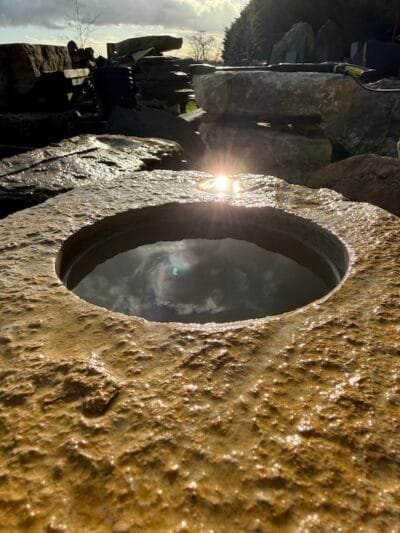
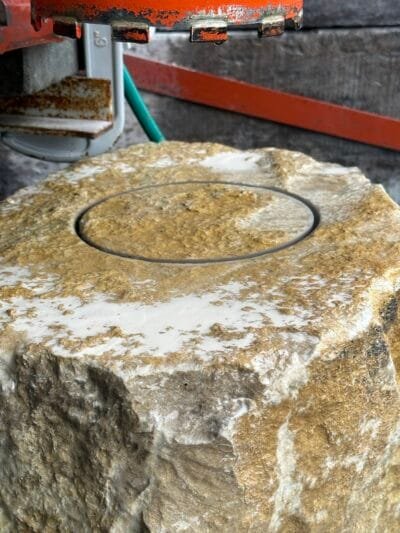
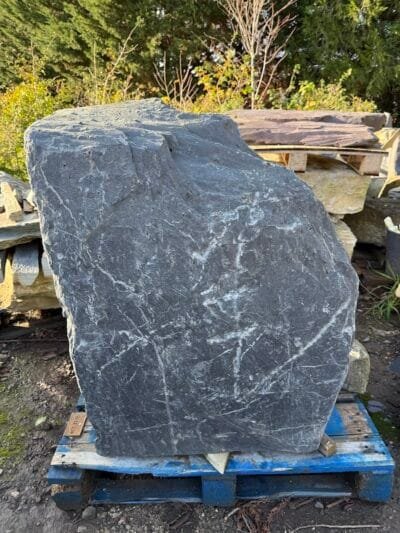
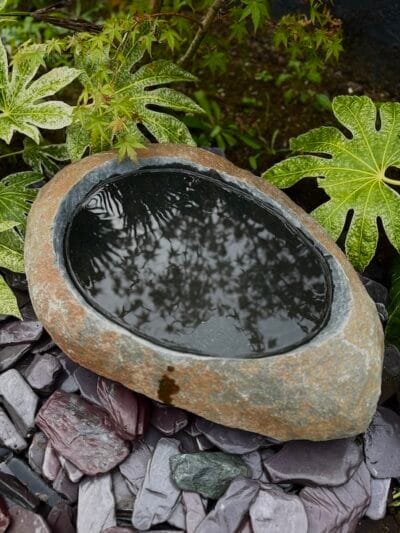
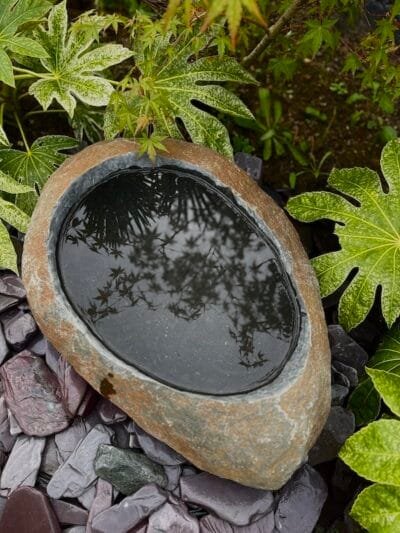
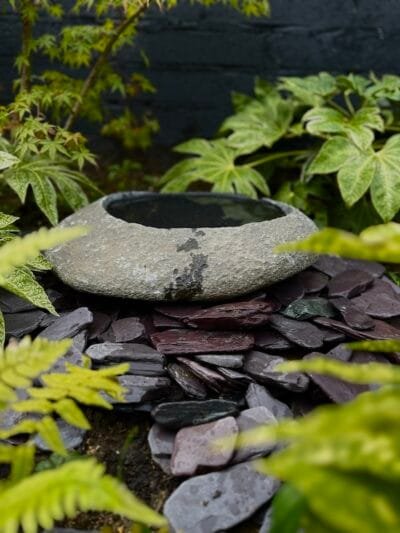
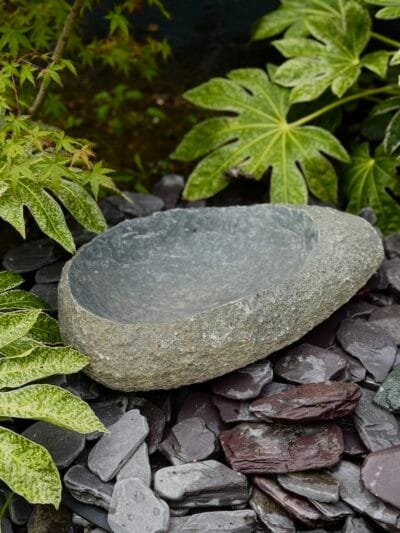
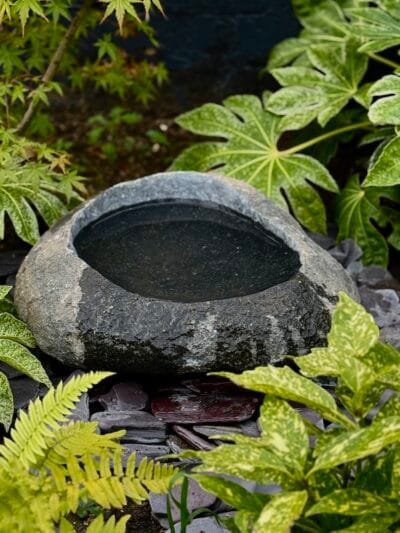
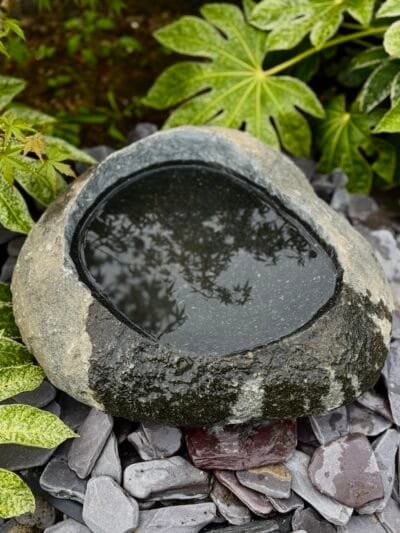
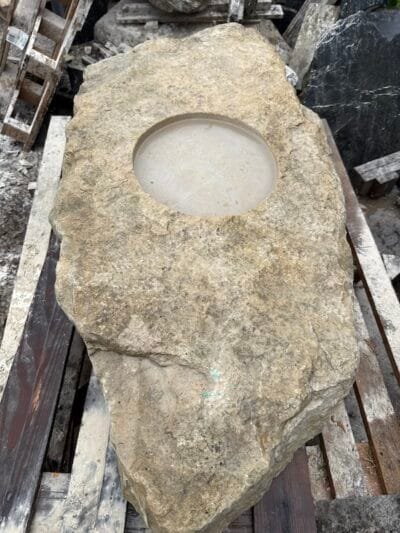
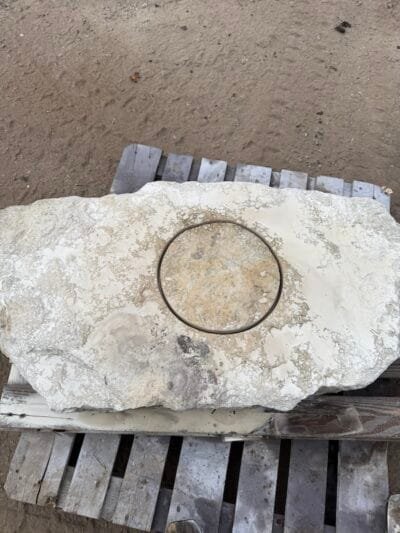
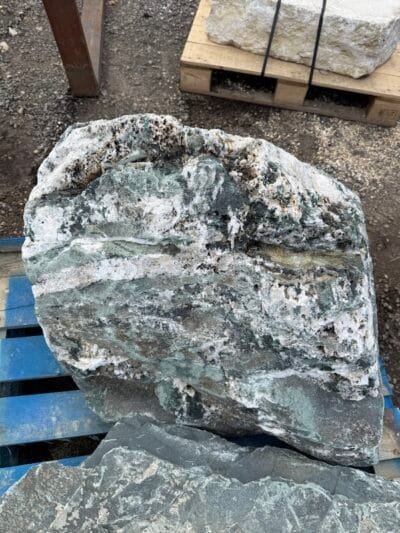
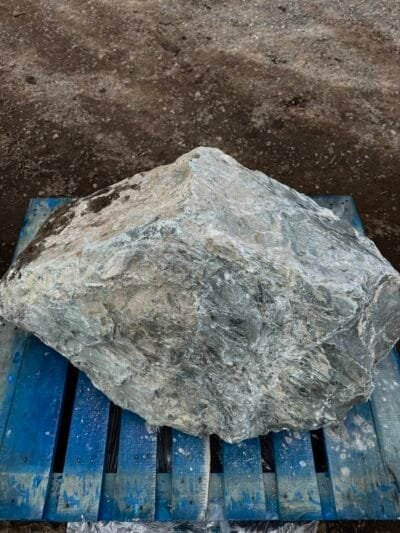
We have a number of Slate Stepping Stones and Japanese Stones available in the workshop which can all be drilled, cut and dressed if suitable. This is our largest and most colourful and varied stock ever. Not all of our stock has been added to the website as we can constantly visiting the quarry this time of year to restock on more stone. We also convert stones into bird baths by carving a bowl in the top to contain water. A recent example is Window Stone WS51 Water Feature Case Study. Alternatively Stone Boulder SB52 could work as a focal point or natural garden seat. Contact us with your requirements.