
Core Drilling Natural Stone Boulders for a London Art Project
Natural stone projects don’t always follow a straightforward path. Sometimes a large stone boulder needs to be carefully selected from a Welsh quarry, transported to a specialist workshop, precisely core drilled and then delivered hundreds of miles away to become part of a bespoke architectural or artistic installation.
That was exactly the challenge we took on with this project.
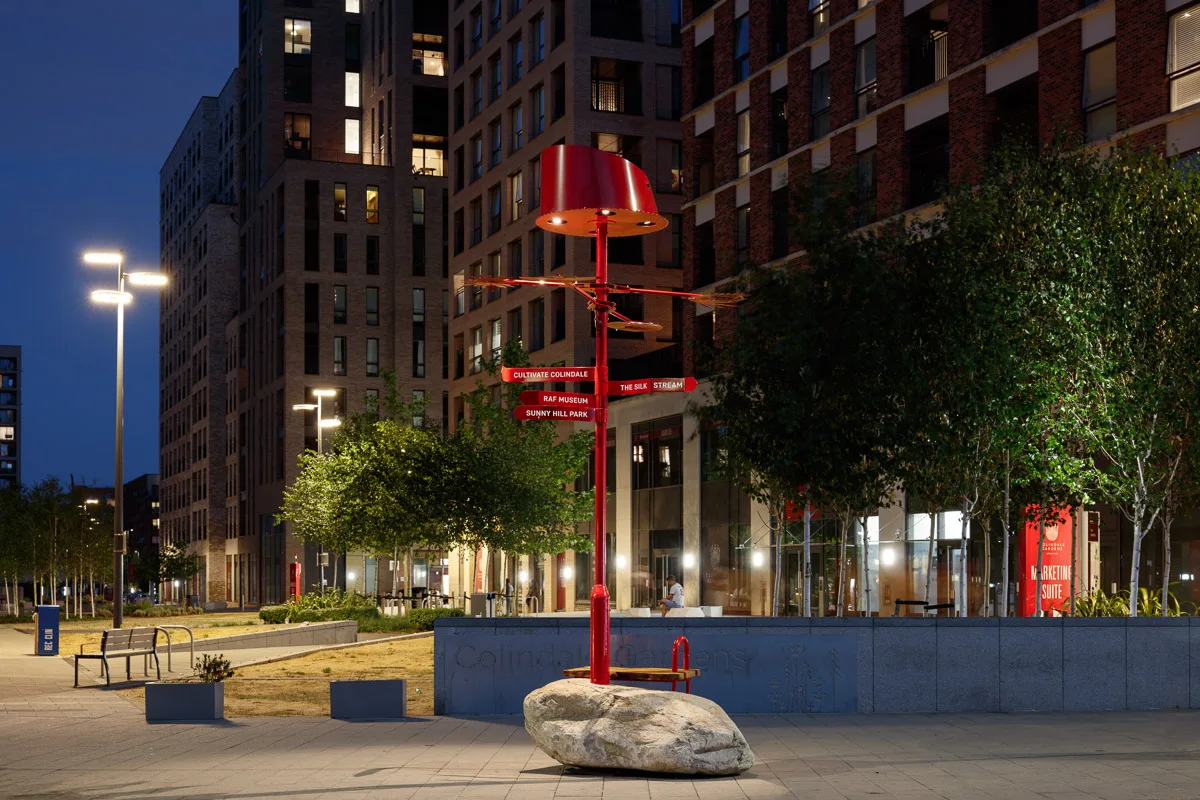
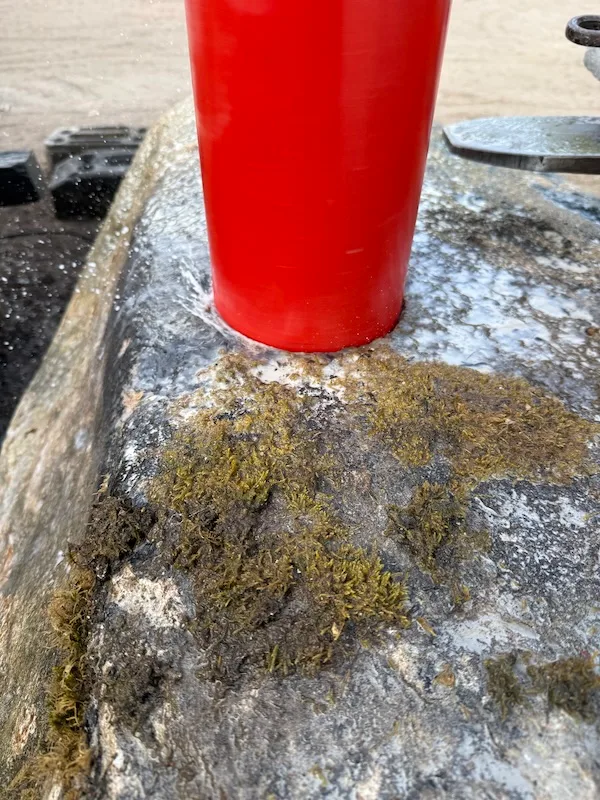
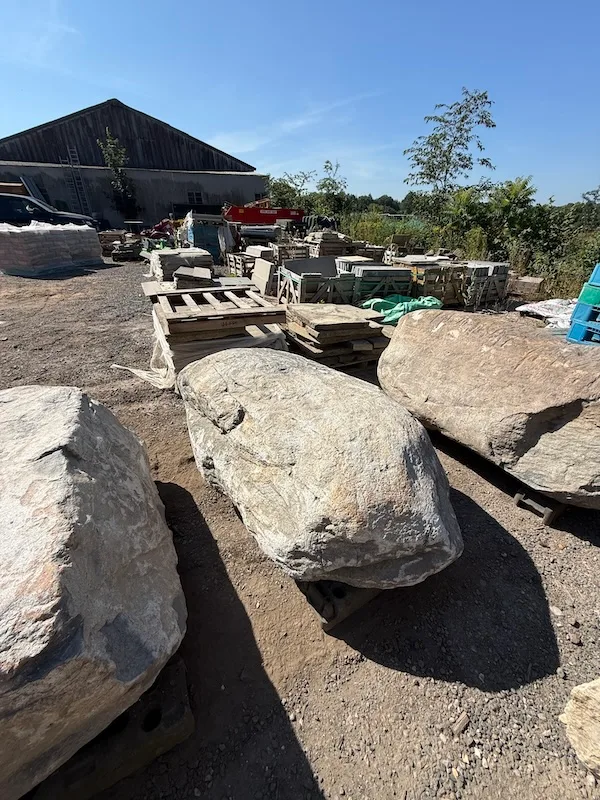
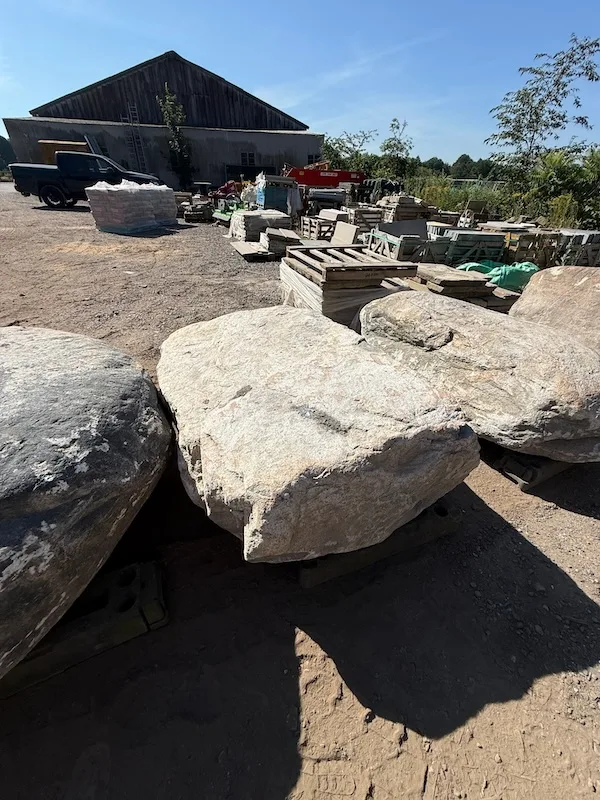
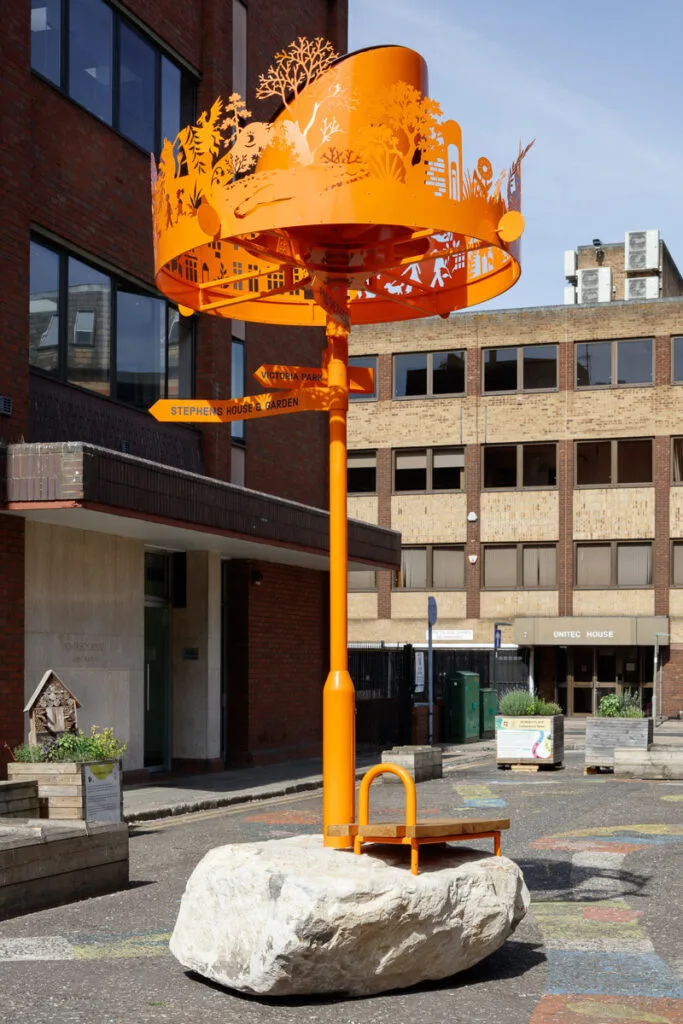
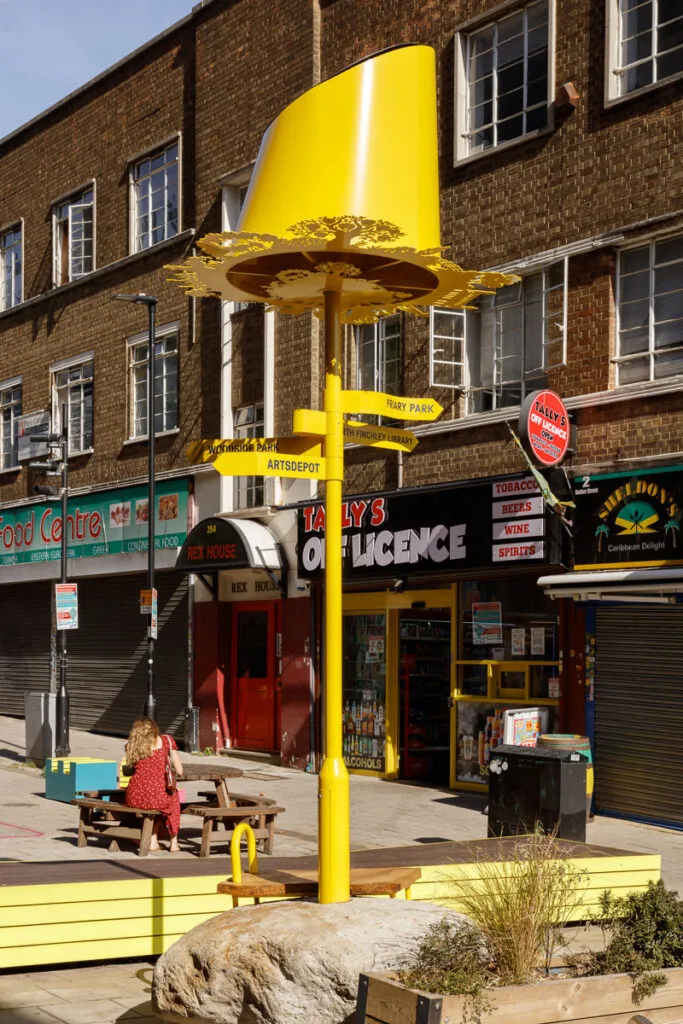
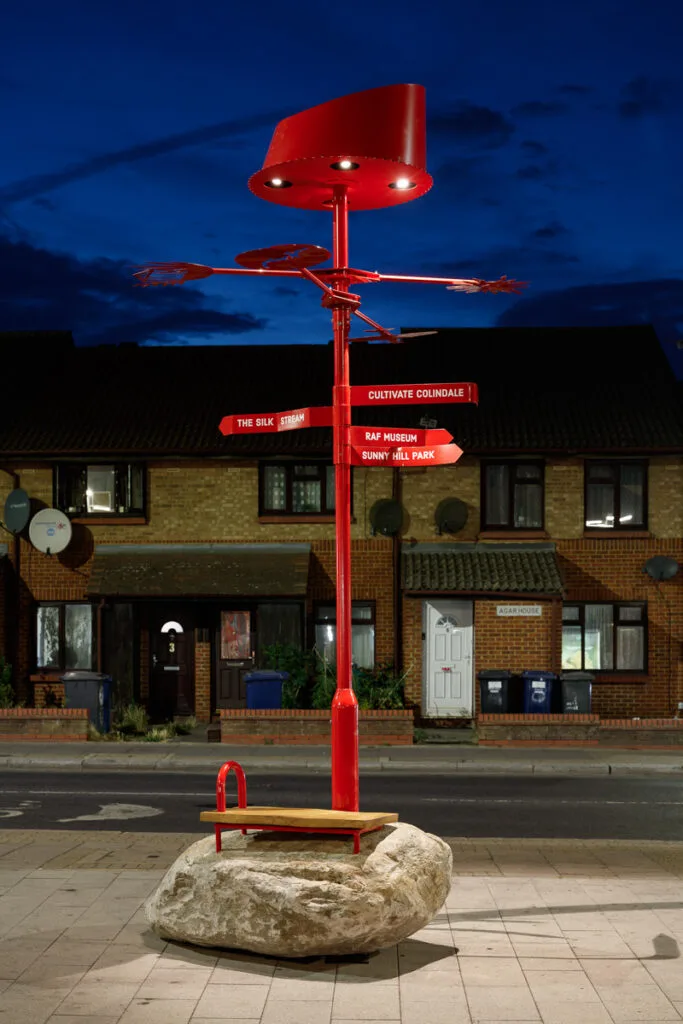
We sourced four large glacial boulders from a quarry in North Wales for an artistic project in London. Each boulder needed to be modified to accommodate a bespoke lamp post and integrated seating. This involved precision core drilling natural stone, with a large 152mm diameter hole drilled into each boulder for the lamp post, together with four 32mm diameter holes to allow the seat to be securely fitted.
Once the drilling was completed in our workshop, we organised specialist HIAB delivery to four separate locations across London.
The project brought together natural stone selection, specialist core drilling, workshop fabrication, heavy lifting and complex logistics — all while retaining the natural appearance and character of the original boulders.
Starting with the Stone
The first stage of the project was sourcing suitable stone.
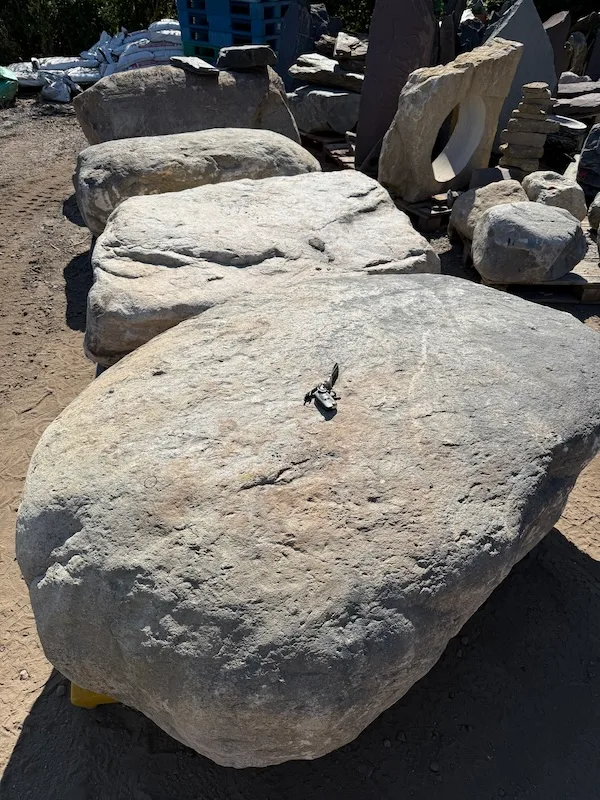
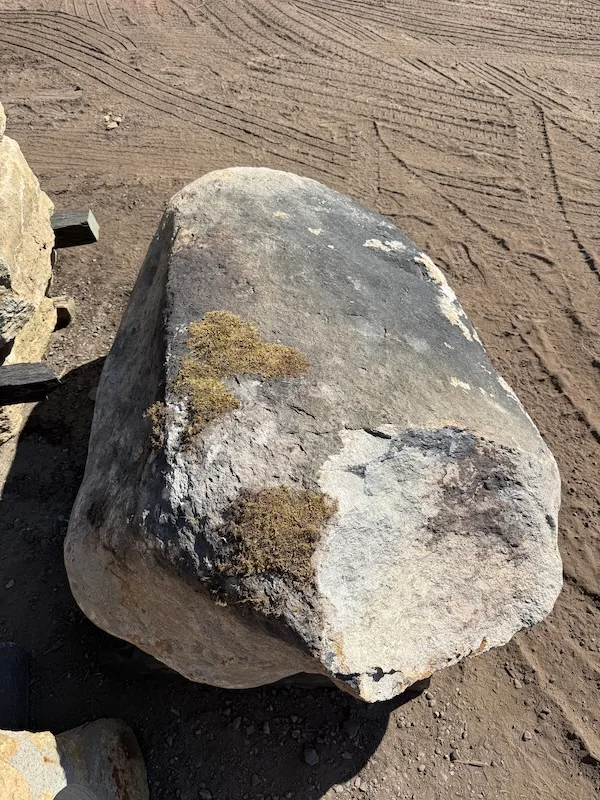
Rather than using standard-cut blocks, the brief called for large natural glacial boulders. These provide a very different aesthetic from conventional masonry. Their irregular shapes, natural weathering and individual character make every piece unique, helping the finished installation feel much more connected to the landscape and natural environment.
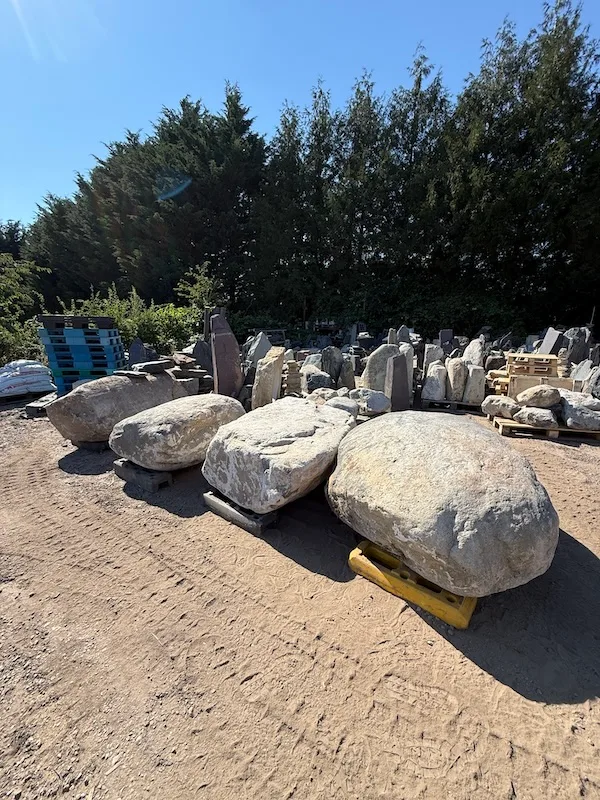
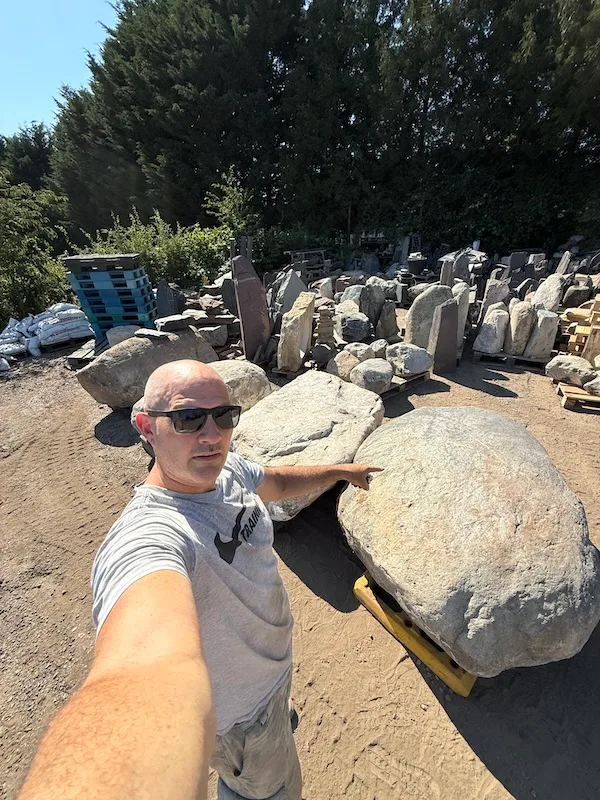
We sourced the boulders from a quarry in Wales, selecting large pieces that were suitable for the intended application.
Working with natural boulders creates an additional layer of complexity compared with drilling a regular stone block. A manufactured slab or block has known dimensions and predictable faces. A glacial boulder, on the other hand, can have an uneven surface, changes in thickness, variations in density and naturally occurring cracks or inclusions.
This meant that the drilling process had to take the individual characteristics of each stone into account.
Before any drilling began, the boulders were assessed in the workshop and the proposed drilling locations were carefully considered. The position of the large central hole needed to work with the shape and stability of the stone while also allowing the lamp post to sit correctly once installed.
The four smaller holes also needed to be positioned accurately so that the seat could be fitted successfully.
Precision Core Drilling in Natural Stone
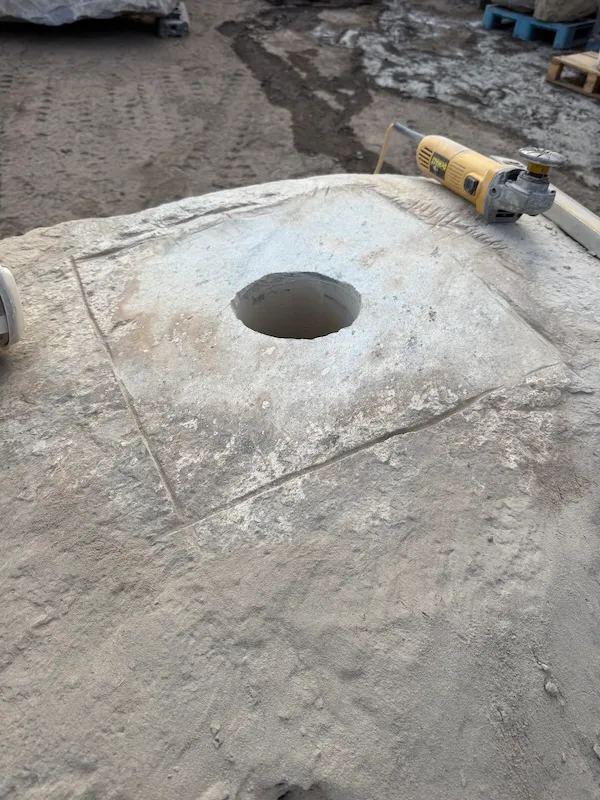
The main requirement for each boulder was a 152mm diameter core-drilled hole.
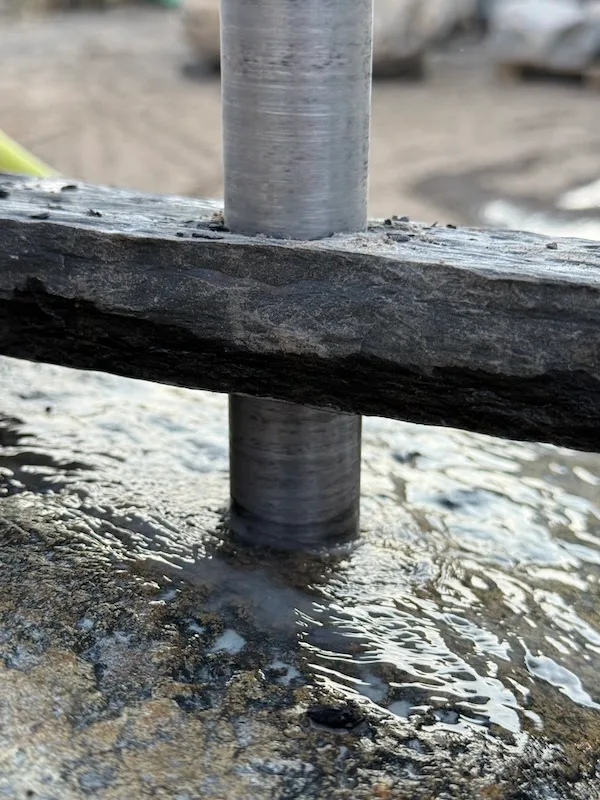
Core drilling is particularly well suited to this type of application because it produces a clean, circular opening and allows us to work accurately through substantial sections of stone. Water is key to ensure the stone is kept cool so the diamond tips can work effectively.
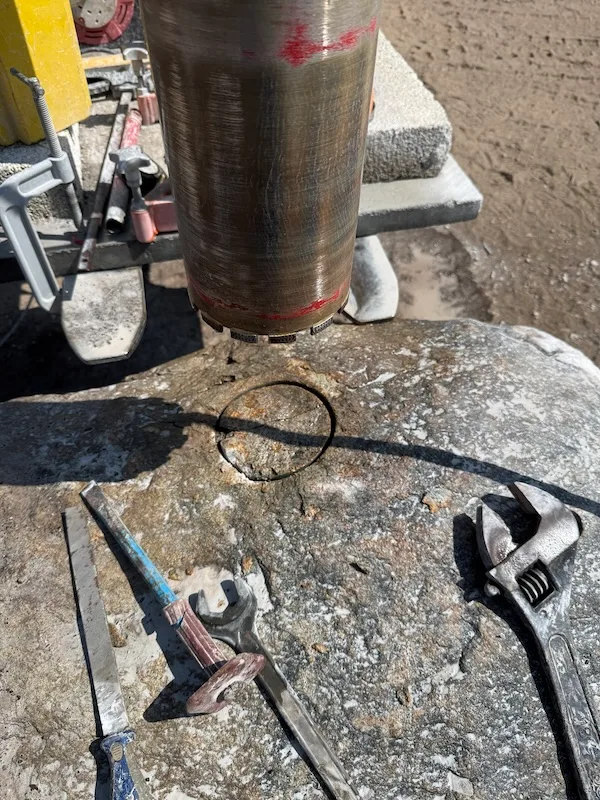
For this project, the 152mm hole was required to accommodate the artistic lamp post. While the diameter may sound relatively simple on paper, drilling a hole of this size through a large, irregular boulder presents a very different challenge from drilling a small hole through a flat piece of stone.
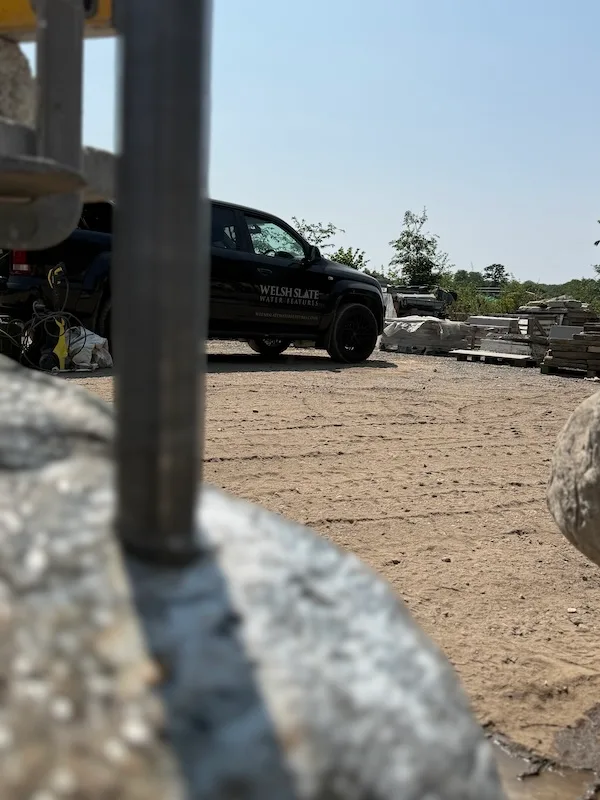
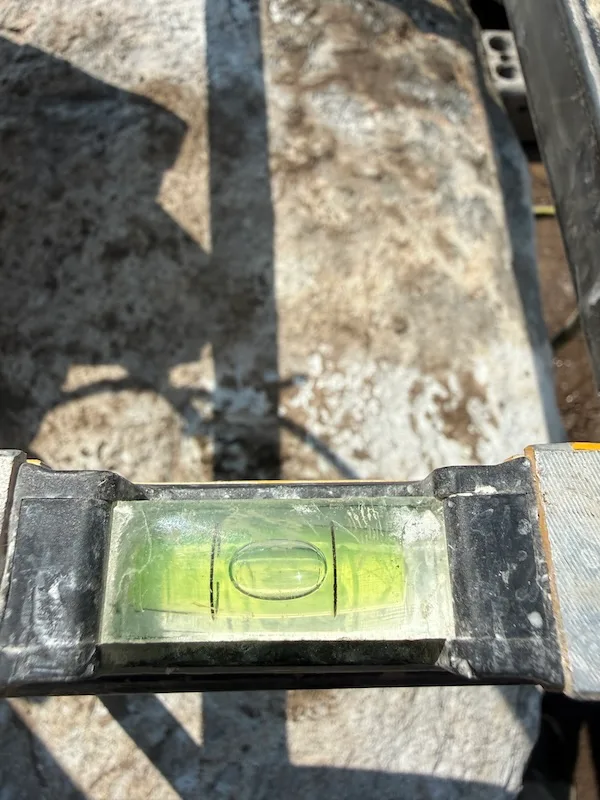
The drilling equipment has to remain stable throughout the operation, and the setup needs to account for the weight and geometry of the stone. The boulder must be securely supported, and the drilling position needs to be established carefully before the core begins cutting.
Once the setup was complete, the core drilling could begin.
The process removes a cylindrical section of stone rather than simply pulverising the material. This allows the hole to be produced with a controlled diameter and a relatively clean finish, which was important for the subsequent installation of the lamp post.
Each boulder was treated as an individual piece rather than simply running the same process four times. Natural stone can behave differently from one area to another, so maintaining control throughout the drilling process was essential.
Four Smaller Holes for the Seating
The second part of the drilling requirement was equally important. Core Drilling Natural Stones cannot be rushed and requires specialist equipment.
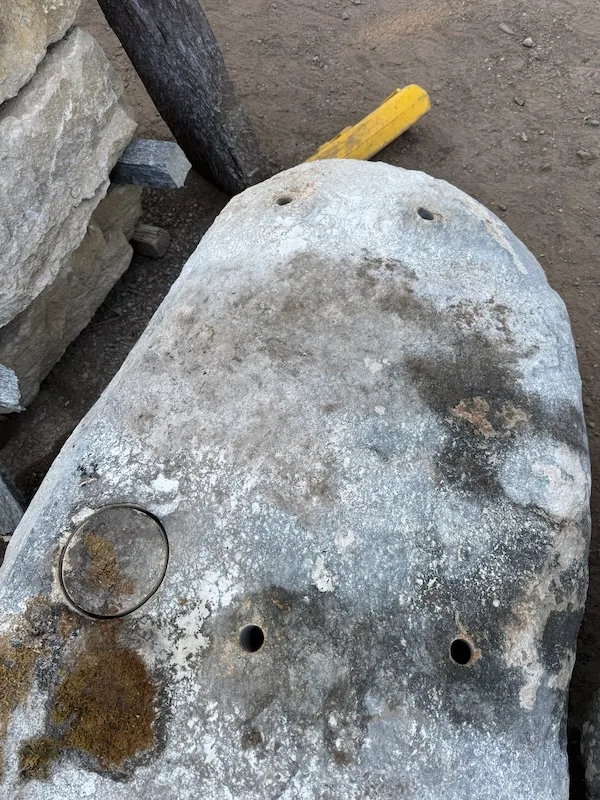
Each stone required four 32mm diameter holes for the seating system.
These holes had to be positioned in relation to the seat design so that the components could be securely attached once the stone reached its final location.
Although considerably smaller than the 152mm lamp post opening, these holes required the same level of care and accuracy.
The seating was designed to work directly with the natural boulder, meaning the relationship between the drilled holes and the shape of the stone was critical. The boulder itself becomes part of the finished piece, rather than simply acting as a hidden structural element.
This is one of the things we particularly enjoyed about the project. The finished installation combines the permanence and irregularity of natural stone with the precision of manufactured seating and lighting components.
The drilling effectively creates the interface between those two worlds.
Working Around the Shape of Each Boulder
One of the biggest challenges with a project like this is that there is no perfectly flat or uniform surface to work from.
The boulders had been selected for their natural appearance, so preserving that character was an important part of the process. We weren’t trying to turn the stones into regular blocks; the objective was to carry out the necessary precision drilling while retaining their natural form.
That required careful positioning and setup in the workshop.
The drilling locations needed to be considered not only from a dimensional perspective but also in terms of how the stone would ultimately sit at its destination.
With four different boulders, each going to a different London location, every stone effectively had its own set of requirements.
The workshop therefore became the point where the natural material was prepared for its eventual role in a highly designed public environment.
Workshop Fabrication Before Delivery
Carrying out the core drilling in the workshop offered a number of advantages.
The stones could be securely positioned and the drilling equipment could be set up in a controlled environment. It also meant that the preparation work could be completed before the boulders were transported to London.
This is particularly important when working with very large and heavy pieces of natural stone.
Rather than transporting an unfinished boulder to London and then attempting to carry out specialist drilling on site, we were able to complete the precision work in the workshop and send the finished stones directly to their respective locations.
Once all the required holes had been completed, the boulders were ready for the next stage of the project: delivery.
Specialist Core Drilling for Natural Stone
Working closely with the client, we sent pictures of the stones before purchase to ensure they were the correct spec, size and weight and suitable for a public environment. The client visited the workshop and we marked up where the holes needed to be. A mini jig allowed us to accurately drill the four smaller holes which needed to be very precise for a bespoke seating frame to be fixed to the stone.
We also carved out a recess of 10mm and approximately 400mm square to allow the mounting plates to sit comfortably within the stone. A slight angle on one of the final locations meant we drilled one on an angle to ensure it sat nicely and in keeping with the environment. The core drilling natural stones process took us much longer than estimated due to the hardness of the rock.
Core Drilling Large Boulders
With a large network of quarries we were able to source the right stones for this project. The client had a specific brief and a number of factors that had to be met to progress with the project. We are fortunate to have a number of quality quarries that we can visit to photograph and mark the exact stone. It’s very important to clients to see the exact stone as they can vary so much.
The Logistics of Moving Large Natural Boulders
The physical size and weight of the stones meant that delivery required more than a conventional transport vehicle.
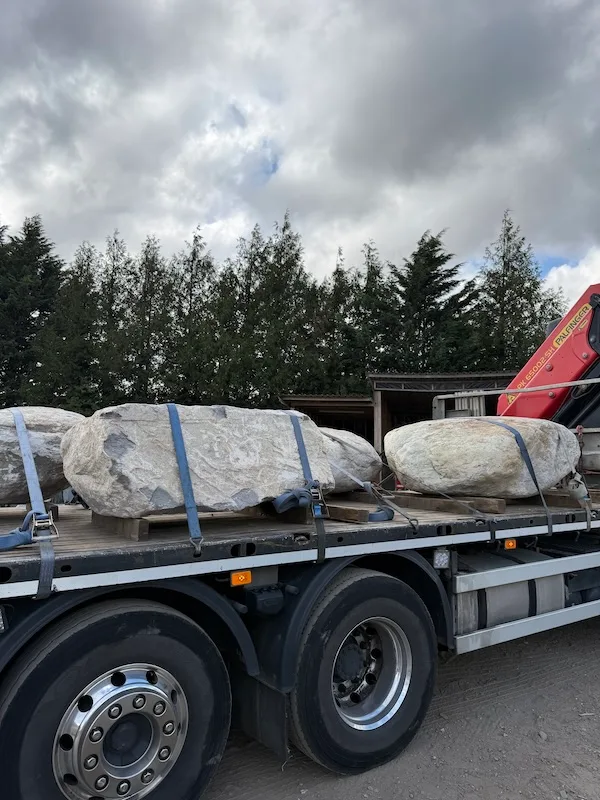
We organised HIAB delivery for the project.
A HIAB vehicle combines transportation with a hydraulic crane, allowing heavy items to be lifted from the vehicle and positioned at their destination without requiring a separate crane to be arranged in many circumstances.
For large natural boulders, this is an extremely useful solution.
The delivery operation had to be coordinated carefully because the four stones were not all going to the same place. Each boulder was destined for a separate location in London, meaning the transport arrangements had to be organised around four individual deliveries.
This added another logistical layer to the project.
The boulders had to be loaded, transported safely and then unloaded using the vehicle’s lifting equipment at their respective destinations. Careful planning was required to make sure the correct stone arrived at the correct location and that the delivery could be carried out efficiently.
Four Stones, Four Locations
One of the most interesting aspects of the project was seeing the process move from a single workshop environment into four separate London locations.
At the beginning, the boulders were simply large pieces of natural stone sourced from a Welsh quarry.
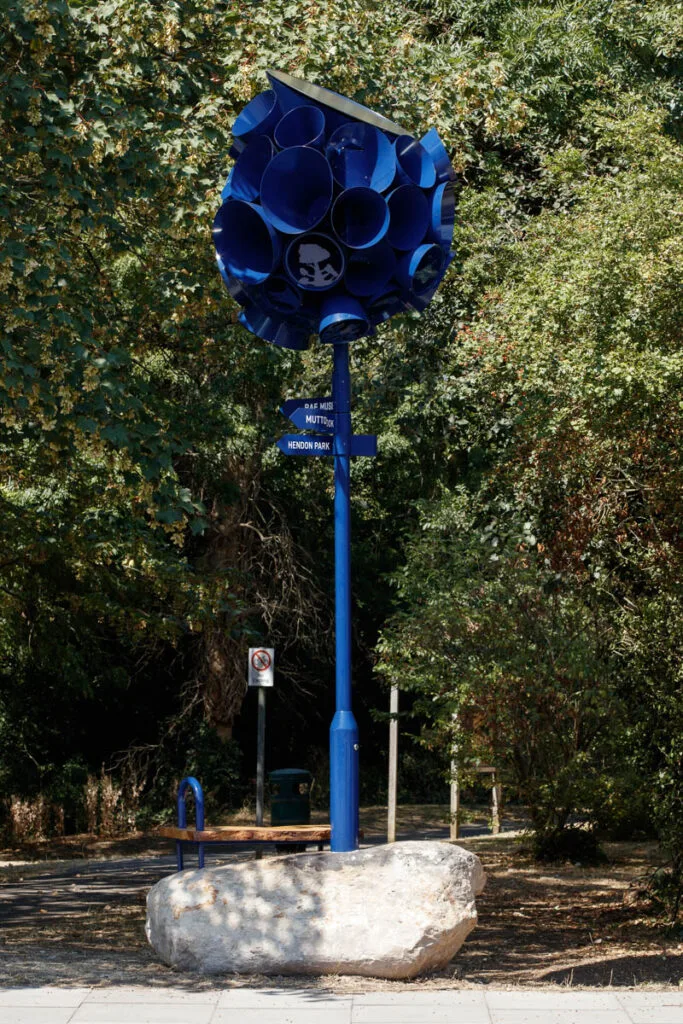
By the end of the process, each had been transformed into a carefully prepared component of a bespoke piece of street furniture.
The 152mm core-drilled opening provided the connection point for the artistic lamp post, while the four 32mm holes allowed the seat to be fitted to the stone.
The result is a combination of natural material and contemporary design.
Rather than hiding the irregularity of the boulders, the project makes it part of the aesthetic. Each stone retains its own shape and character, meaning that no two finished installations are exactly alike.
Why Specialist Stone Drilling Matters
Projects like this demonstrate why specialist core drilling can be an important part of stone fabrication and installation.
A hole may look like a relatively simple feature, but when it needs to be accurately positioned within a large, irregular piece of natural stone, there are a number of factors to consider.
The diameter needs to be correct.
The position needs to be accurate.
The stone needs to be properly supported.
The drilling equipment needs to be set up securely for core drilling natural stones.
And, perhaps most importantly, the process needs to be carried out with an understanding of how the stone will ultimately be used.
In this case, the drilled holes weren’t simply decorative openings. They formed the connection points between the boulders, the lamp posts and the seating.
That meant the accuracy of the workshop drilling was an essential part of the wider installation.
From Quarry to Finished Installation
Looking back at the project, what stands out is the journey each boulder went through.
The process began in a Welsh quarry, where suitable natural glacial boulders were sourced.
They were then transported to our workshop, where each stone was assessed and prepared for drilling.
A 152mm diameter core hole was drilled for the artistic lamp post, followed by four 32mm diameter holes for the seat fittings.
Once the core drilling natural stones was complete, the stones were prepared for transportation.
We then organised HIAB deliveries to four separate London locations, where the boulders could be lifted into position as part of the finished public realm installations.
It was a project that combined quarrying, stone selection, precision core drilling, workshop fabrication, heavy transport and on-site logistics.
A Great Example of Core Drilling Natural Stones and Modern Design
We particularly enjoyed working on this project because it demonstrates just how versatile natural stone can be.
The boulders began life as large, naturally formed pieces of stone. Through careful selection, precise drilling and thoughtful logistics, they became an integral part of a contemporary artistic installation.
The contrast between the rough, organic appearance of the glacial boulders and the precise engineering required for the lamp posts and seating is what makes the finished pieces so distinctive.
For us, projects like this are about more than simply drilling holes in stone. They are about understanding the material, working accurately within its natural limitations and delivering a finished component that performs its intended function while retaining the character that made the stone worth selecting in the first place.
From a Welsh quarry to four separate London streets, these boulders had quite a journey — and we were pleased to play a part in turning them into something functional, artistic and built to last.
Need Large Natural Stone Core Drilled?
If you have a project requiring large boulders, natural stone or other substantial stonework to be accurately drilled, we can help with sourcing, preparation and specialist core drilling. Core Drilling Natural Stones requires many factors to be considered when taking on a project of this scale.
Whether you require a single drilled boulder or multiple stones for a larger architectural, landscaping, public realm or artistic project, we can discuss the requirements and help develop a practical solution.
Contact us to discuss your natural stone drilling project and requirements.